

01
Call us
Call or WhatsApp 0330 3050007, or send the form, to book with Dr Shaista Karim.
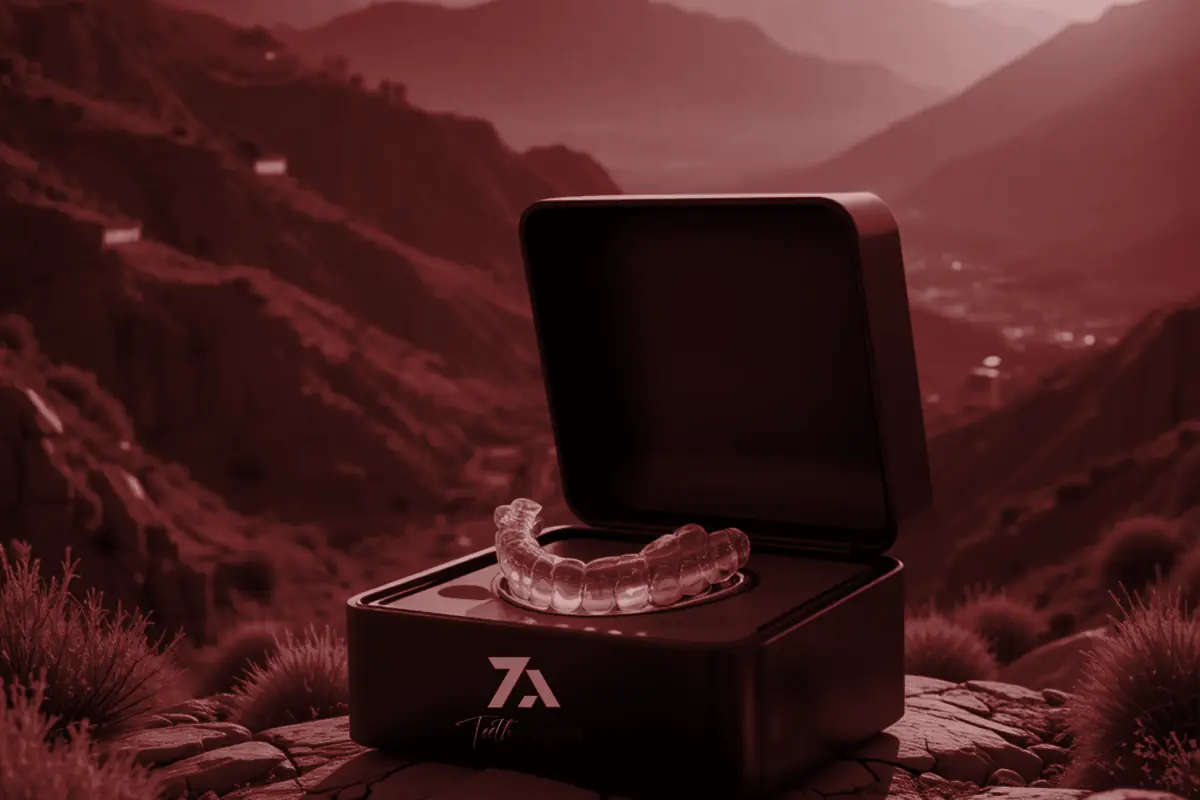
Teeth Aligners / Gilgit
Teeth aligners in Gilgit with Dr Shaista Karim: you are examined and followed up in Gilgit Baltistan while our laboratory makes your trays and ships them north. The price matches Lahore and Islamabad, PKR 2 to 5 lakh for the whole course. A free consultation tells you whether clear aligners can straighten your teeth.
The short answer
Gilgit BaltistanWith Dr Shaista KarimYou can get teeth aligners in Gilgit Baltistan from Dr Shaista Karim, who sees patients at DHQ Hospital Gahkuch. Call or WhatsApp 0330 3050007 to book your appointment. Every tray comes from our laboratory in Pakistan and is posted up to Gilgit, and the whole course is priced between PKR 2 lakh and 5 lakh.
The first consultation is free. You will know whether aligners suit your teeth before you commit, and without travelling down country to find out.
Before you book
Gilgit patients usually want to know who they will see, what it costs and how often they will need to come in. Here it is in one table.
| Question | Answer for Gilgit |
|---|---|
| Consultant | Dr Shaista Karim |
| Where she sees patients | DHQ Hospital Gahkuch, Gilgit Baltistan |
| Booking | 0330 3050007, call or WhatsApp |
| First consultation | Free |
| Full course price | PKR 2 to 5 lakh, the same as every other city |
| Where trays are made | Our own laboratory in Pakistan, then sent to you |
| Daily wear | At least 22 hours |
| Tray changes | About once a week, at home |
| Shortest treatments | About six months, then about six months of retainer wear |

Your consultant
Dr Shaista Karim is our aligner consultant in Gilgit. A graduate of Army Medical College, she gained much of her clinical experience at DHQ Hospital Gahkuch, treating patients from across the region, and that is where she sees our aligner patients.
Having a consultant in Gilgit means your examination, fitting and reviews happen close to home. Planning and production are handled by our team, and the trays travel to you instead of you travelling to them.
Why Teeth Aligners
Choose Teeth Aligners in Gilgit because you get a consultant in the region, the same clinician approved planning and laboratory as our city patients, and the same price, without making the long journey south for each step.
Dr Shaista Karim examines, fits and reviews you without a trip down country.
Every tray is made in our own laboratory in Pakistan and sent to Gilgit.
A full course costs PKR 2 to 5 lakh, exactly as in Lahore or Islamabad.
A clinician signs off your plan, stage by stage, before manufacture begins.
A lost tray or refinement is made from your case file, not ordered from abroad.
The before and after cases on this page were treated with our aligners.
Book a free consultation with Dr Shaista Karim and find out whether aligners suit you, how long it would take and what it would cost.
Price
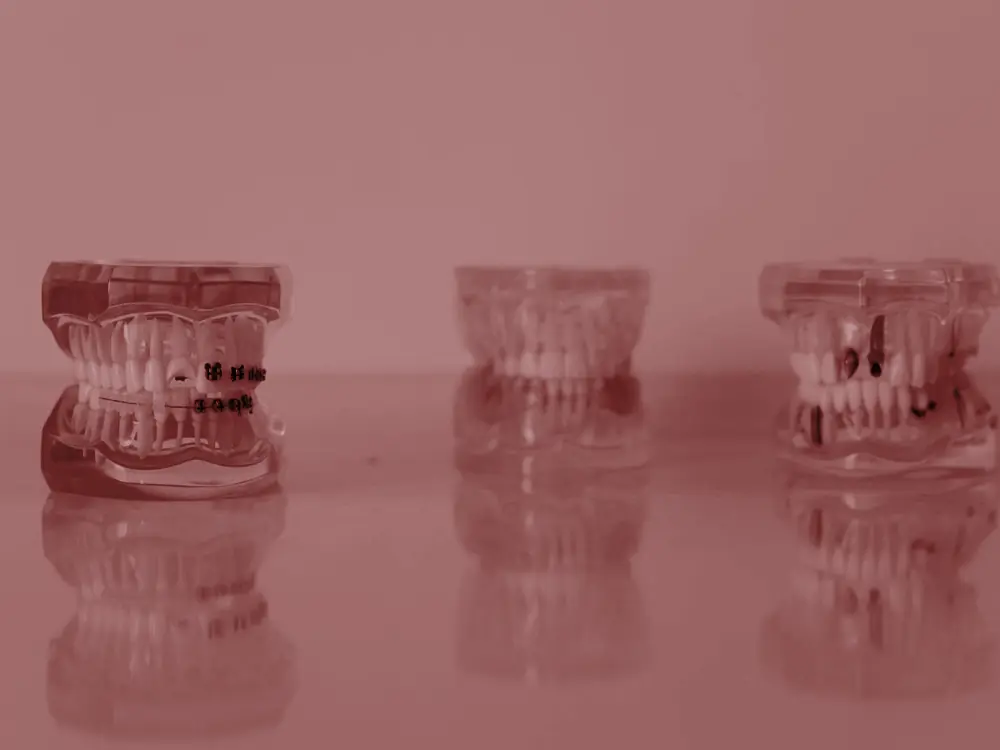
With us, teeth aligners in Gilgit are priced at PKR 2 to 5 lakh per full course, matching our other cities. The price depends on your teeth: a simple gap needs fewer trays and sits low in the range, while crowding or a bite correction needs more and sits higher.
Sending trays to Gilgit does not change the price. The cost follows the number of trays in your plan, which Dr Shaista can estimate once she has examined you.
Read our breakdown of the aligners price in Pakistan for what moves a case up or down and what to compare between quotes.
Invisible braces
Invisible braces in Gilgit are clear aligners: thin, transparent, removable trays that move your teeth a little with each tray until they reach the planned position. There are no brackets and no wires, and the trays come out to eat and clean.
The term invisible braces is what most people search for, but the treatment is the same one others call clear braces or transparent aligners.
Their practicality matters in a region where appointments mean travel. With no wires to tighten or brackets to repair, there are fewer emergency visits than with fixed braces.
Brands
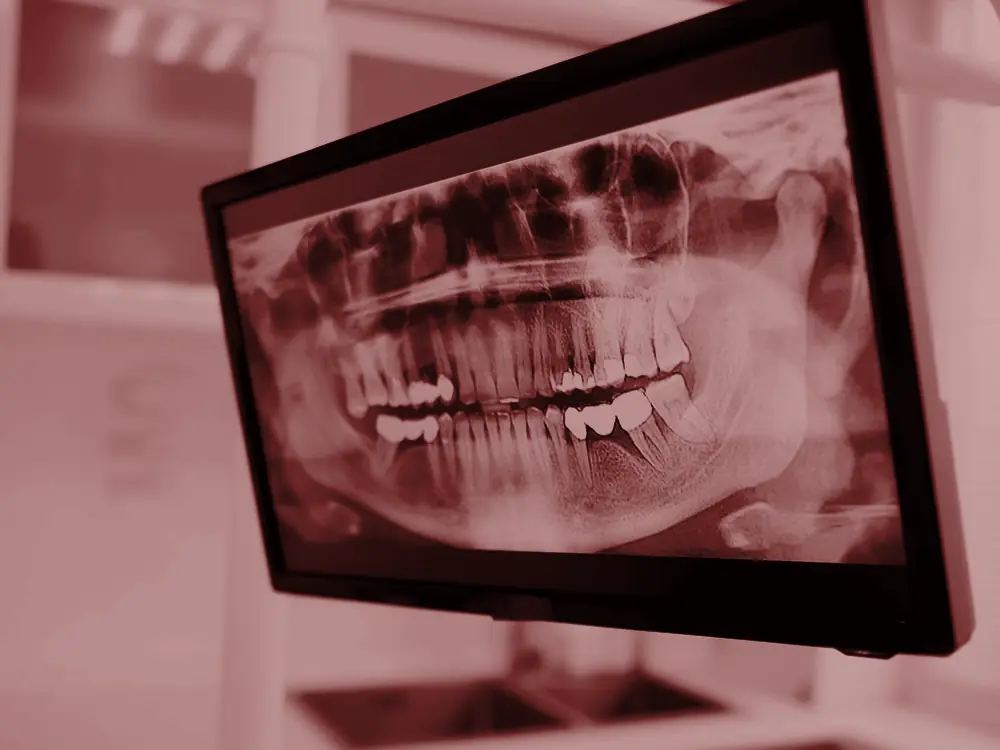
We do not provide Invisalign, which is an imported US brand; in Gilgit we offer clear aligners of our own, which clinicians plan and our Pakistani laboratory produces. Each approach straightens teeth with a staged series of trays.
For patients far from the big cities, where the trays are made matters even more. An imported series, and every replacement, travels from abroad before it travels north. Ours are made in Pakistan from your case file.
See how the costs compare in our Invisalign price in Pakistan section.
Distance
Aligner treatment works well far from the laboratory because only some steps need you in person. Dr Shaista examines you, takes your impressions, fits your trays and reviews your progress in Gilgit; the planning and manufacture happen in our laboratory, and the finished trays are sent to you.
This split is how we treat patients everywhere, including those living abroad. The trays are made in one laboratory and sent wherever the patient is.
What matters is that the steps needing a clinician's hands and eyes, the examination, the fit and the reviews, are never skipped. In Gilgit they happen with Dr Shaista.
Your journeys

You will need to come in for the consultation, the impressions, the fitting and your reviews; tray changes happen at home, roughly every week, so most of your treatment needs no travel at all.
If you live a long way from Gilgit, tell us when you book. The consultation and impressions can often be done in one visit, and trays can be handed over several at a time, which saves repeated journeys.
Between reviews, clear photos of your teeth can help your clinician keep an eye on progress.
Across the region
Yes. Patients from elsewhere in Gilgit Baltistan, including the valleys around Gilgit, can book with Dr Shaista and travel in for their appointments. Her years at DHQ Hospital Gahkuch mean she is used to seeing patients who travel a long way.
Plan your visits with the season in mind, and tell us if travel is difficult at certain times of year. Appointments can be arranged around it.
If you spend part of the year in Islamabad or Rawalpindi, you can also be seen at our Islamabad office and keep the same plan.
When roads close
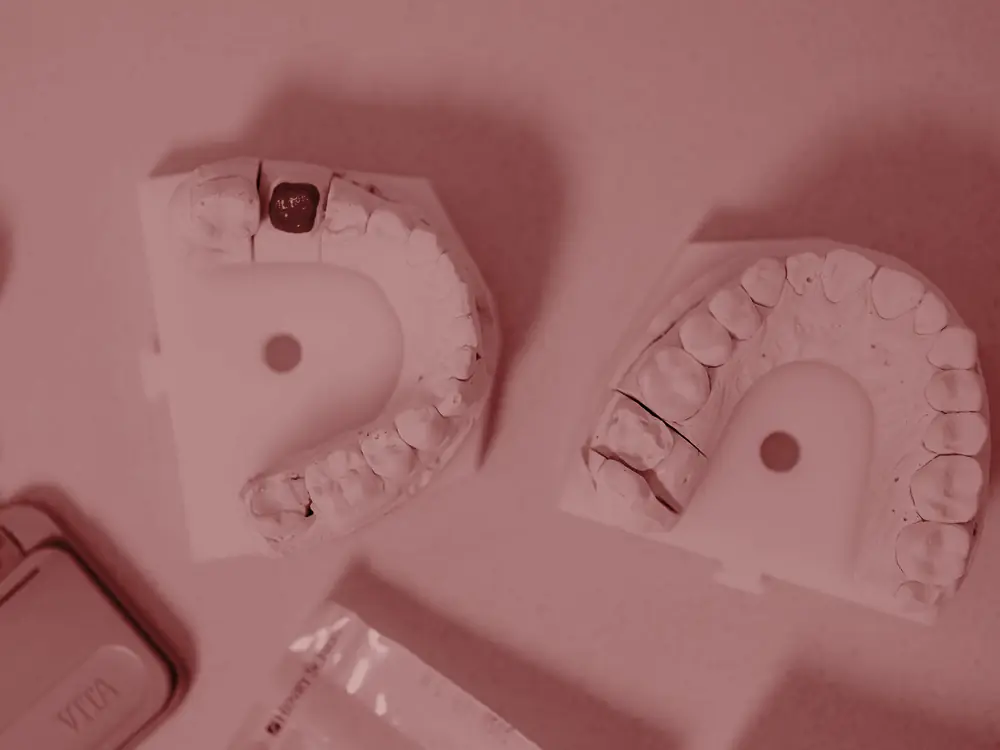
If roads close during your treatment, keep wearing your current tray, move to the next tray on schedule if you have it, and call or WhatsApp us; a missed review can be rearranged once travel is possible. Landslides and snow can close routes for days, and treatment can wait for them.
Holding your next few trays at home is the best protection. Ask Dr Shaista to issue trays in sets if you live where closures are common.
Never skip ahead several trays to make up for a missed review. If a tray will not seat, go back to the previous one and tell us.
Planning the year
Plan aligner treatment around the seasons by booking your consultation and fitting when travel is easiest, asking for trays to be issued in sets before winter, and agreeing review dates that avoid the months when journeys are hardest. Your teeth keep moving whatever the weather, so the aim is to keep trays in hand.
Summer suits the appointments that need you in the chair, while the trays themselves work just as well through a snowed in January. Many patients find winter, with more time indoors, the easiest season to keep up 22 hours a day.
If you work through the summer tourist season, mention it. Long, irregular days make wear time harder, and a plan that expects it is easier to keep.
In the mountains

Yes. You can trek or travel in the mountains with aligners if you pack the case, your previous tray as a spare, a small toothbrush and enough bottled or boiled water to rinse with. The trays stay in on the trail, which makes wear time easy.
Meals at camp are the moment to be careful. Take the trays out straight into the case, never onto a rock or into a pocket, and rinse your mouth well before they go back in.
If your next tray falls due while you are away, take it with you rather than delaying the change. Staying on schedule matters more than the setting.
Travelling in
Bring your current tray in its case, your previous tray, any recent dental x-rays, and a note of questions or problems since your last visit. If it is your first appointment, also bring records from any earlier braces or aligners.
Allow extra time for the journey, and eat before you arrive so you are not in a hurry to remove the trays at the clinic.
If you have travelled a long way, tell the team when you arrive. Where possible, everything needed on the day can be done in one visit.
Getting started
Starting aligners in Gilgit takes five steps, and the trays do the travelling.
Call or WhatsApp 0330 3050007, or send the form, to book with Dr Shaista Karim.
Your teeth, gums and bite are examined and your goals discussed.

Moulds of your upper and lower teeth go to our laboratory for planning.

A clinician approves your movement plan and your full course price is confirmed.

Your trays are made, sent to Gilgit and fitted with your kit and schedule.
Choosing well
Judge an aligner provider in Gilgit by whether a clinician examines you in person, who approves your plan, what the trays are made of, how quickly a lost tray can be replaced, and whether a retainer plan is part of the treatment. Distance makes the last two especially important.
Each of these is explained further in the best aligners in Pakistan buyer's guide.
What we treat
Aligners can correct the tooth position problems most people want fixed, plus many bite problems that come from the teeth rather than the jaws. Follow the links for detail.
Movement after earlier braces, often a short plan.
Results
Our aligners have delivered results like these real cases, each treated with trays from our laboratory.
 After

 After

 After

Timeline
Treatment in Gilgit takes the same time as anywhere else: a simple case needs at least about six months of active wear and roughly the same again in retainers, while crowding and bite problems need longer. Distance does not slow the teeth.
What can slow treatment is a gap between trays, for example waiting for a replacement or a missed review. Holding spare trays and keeping in touch prevents most delays.
Our guide to how teeth aligners work explains why teeth move a little at a time.
Tea
No. Take the trays out for tea, whether doodh patti or salt tea, and for any other hot or sweet drink, then rinse before they go back in. Heat can warp the plastic, and milk and sugar trapped under a tray sit against the teeth for hours.
Plain water is the only drink to keep with the trays in. In cold months, when tea is constant, drink it with meals while the trays are already out, rather than cup after cup through the day.
This one habit protects both your wear time and your enamel.
Keeping track
Check progress between visits by making sure each new tray seats fully within a day or two, with no gap at the tips of the teeth, and by taking a clear photo of your smile at each tray change. Photos show change that is too slow to notice in the mirror.
If a tray does not seat, or a gap appears between the tray and a tooth, send a photo and call us. It may mean a tooth needs more time before the next tray.
Bring your photos to each review. They help Dr Shaista see how treatment has gone between appointments.
Same results

Yes. Aligners work as well for patients far from a city as for anyone else, because the trays, the plan and the material are identical; what changes is how appointments are arranged. The teeth respond to the trays, not to the postcode.
The cases that go best are the ones where wear time stays high and problems are reported early. Living far away makes both habits more important, not less.
Patients who keep spare trays, send clear photos and stick to their schedule finish on time wherever they live.
Getting ready
Before your trays arrive, have any fillings or gum treatment Dr Shaista recommended completed, get a professional clean if it has been a while, and start practising the routine of eating at set times. Trays fitted on healthy, clean teeth work best.
It also helps to buy a travel toothbrush and a small bottle for water to keep in your bag, so the habits are ready before the first tray is.
Decide where the case will live at home and at work. Most lost trays are lost in the first month, before that habit forms.
Healthy mouth
Protect your teeth when a dentist is far away by brushing twice a day and after meals, flossing daily, drinking only water with the trays in, and booking any dental check up you need before treatment starts. Aligners trap whatever is on the teeth, so prevention matters.
Straightening crowded teeth often makes them easier to clean for life, which is one of the lasting benefits of treatment.
Tell Dr Shaista about any tooth that aches or feels sensitive, rather than waiting for it to settle on its own.
Fitting day
When your trays are fitted in Gilgit, Dr Shaista places any attachments your plan needs, checks that the first tray sits snugly on every tooth, and has you practise taking it in and out until you are confident. You leave with your kit, your first trays and a written schedule.
Ask how many trays you will take home and when your first review falls. For patients who live far away, this is the moment to agree a plan for the months ahead, including what to do if a tray is lost or cracks.
The first tray will feel tight that evening. That is normal, and it eases within a day or two.
Short plans

The aligner cases that finish fastest are small gaps, mild crowding of the front teeth and teeth that have drifted slightly since earlier braces. These need fewer trays, so they also sit at the lower end of the price range.
Even a short case needs the same examination, the same care with impressions and a retainer at the end. Speed comes from the size of the movement, not from skipping steps.
Dr Shaista can tell you at the consultation whether your case is likely to be a short one, and roughly how many trays it would take, so you can plan your appointments around it.
Photos that help
Take a useful progress photo in good daylight, facing a window, with your lips pulled back by clean fingers so every front tooth and the gum line show. Take one straight on with your teeth together, then one from each side, and one with the tray in place.
Hold the phone level with your mouth rather than above it, and keep the same position each time so photos can be compared. Blurry or dark photos hide the details your clinician needs, such as a small gap between tray and tooth.
Send the photos with a short note on how the tray feels. Together they tell us far more than either alone.
Reviews
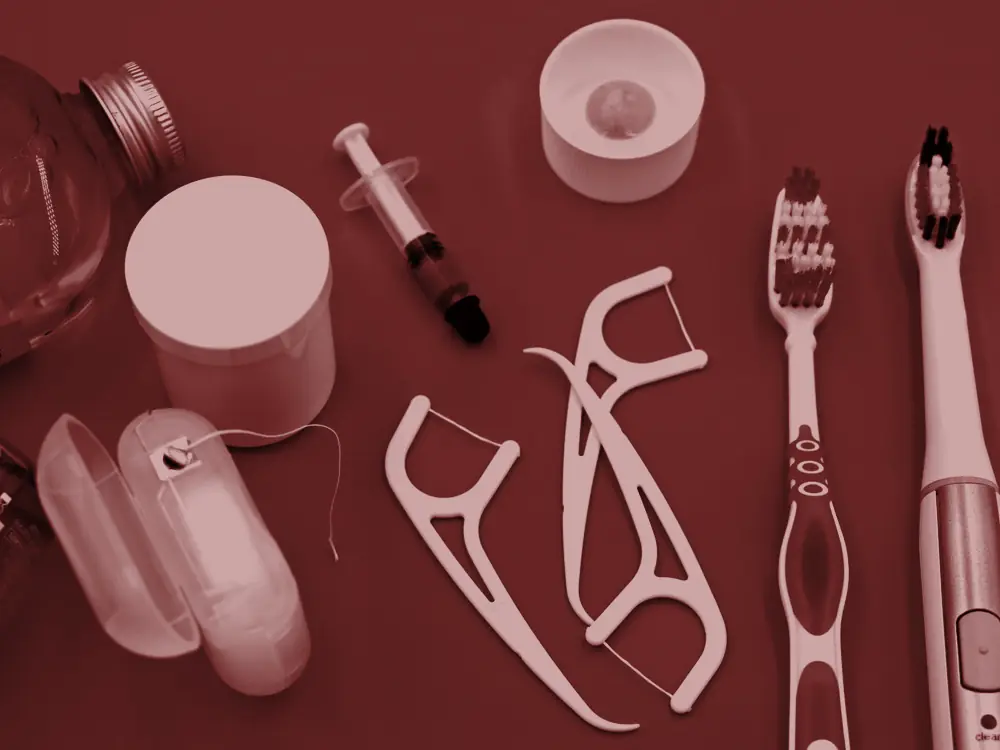
At a review, Dr Shaista checks that your current tray seats fully, that each tooth is keeping pace with the plan, that attachments are in place and that your gums are healthy. If anything is behind, she decides whether to slow the tray changes or plan a refinement.
Reviews are also when you can collect your next trays, so time them with your tray schedule. Bring your photos and any questions.
Why 22 hours
Aligners need to be worn 22 hours a day because teeth move only under steady, continuous pressure; when the tray comes out, the pressure stops and the teeth begin to settle back. Short daily breaks for meals are fine, long ones undo progress.
Each tray is designed to move your teeth a fraction of a millimetre over about a week. If it is worn for fewer hours, the teeth do not finish that movement, and the next tray will not fit as it should.
That is why wear time is the single biggest thing you control, wherever you live.
Away from the clinic
If a tray cracks when you are far from the clinic, stop wearing it, switch to your previous tray, or to the next one if it is due within a day or two, and send us a photo. A cracked tray can have sharp edges and no longer applies the right force.
Most cracks come from biting the trays into place or removing them from the front. Press them in with your fingers and use the tools from your kit to lift them out from the back.
Spare trays
Keep your previous trays because they are your safety net: if your current tray is lost or cracks, the previous one holds your teeth in place until a replacement arrives. In a remote area, that can save weeks of drift.
Store each old tray clean, dry and in its numbered bag. Throw them away only when your clinician says treatment is complete.
Replacements
If you lose a tray in Gilgit, wear your previous tray, or the next one if it is nearly due, and call us; a replacement is produced from the file we hold on your case and posted up to you. Nothing has to be ordered from abroad.
Most trays are lost at meals, wrapped in a napkin or left on a plate. The case from your kit is the simplest way to stop that happening.
Getting used to them
The first days with aligners bring pressure on the teeth for a day or two, a slight lisp, and some practice taking the trays in and out. By the end of the first week most patients barely notice them.
Put each new tray in at night so you sleep through the tightest hours, and choose softer food for the first evening if your teeth feel tender.
Use the aligner tools from your kit until removal becomes easy, working from the back teeth forward.
Care

Clean your aligners with cool water and a soft brush each time they come out, and soak them with the cleaning tablets from your kit. Do not use toothpaste, which scratches them, or hot water, which can bend them out of shape.
Brush your teeth before the trays go back in. Clean teeth and clean trays together keep the plastic clear and your breath fresh.
Your kit
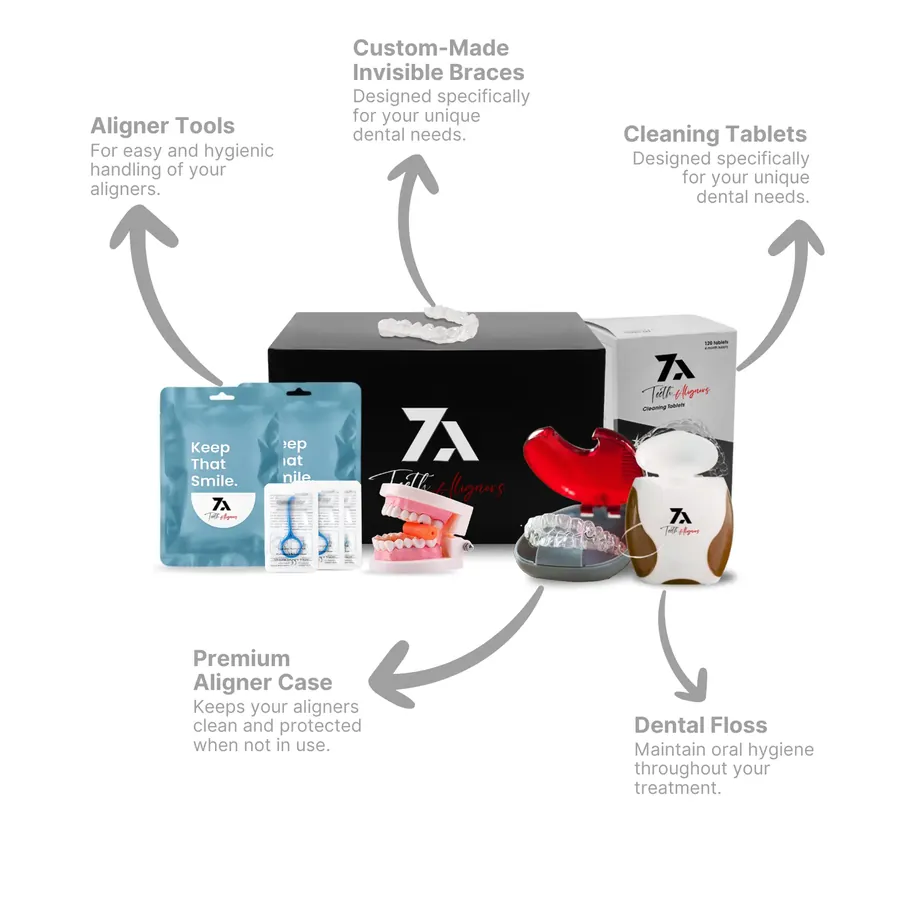
Your aligners come with a protective case, a pair of tools to lift and seat the trays, tablets for cleaning them, and floss. The kit means you have everything for daily care from the day you are fitted, with nothing to source locally.
Keep the case with you whenever you leave home, and the tablets and floss where you brush.
A Water Pik device is an optional extra some patients find useful.
After treatment
Keep your teeth straight after treatment by wearing a retainer: regularly for about six months after the last tray, then at night for the long term. Without one, teeth drift back towards where they started.
Our laboratory makes the retainer from your final moulds and sends it up for fitting. The clear retainers guide explains how they work and how to care for them.
Because replacing a retainer takes time when you live far away, look after it carefully and keep it in its case.
Teenagers
Yes, teenagers in Gilgit can have aligners once the adult teeth are mostly in, as long as they keep the trays in for around 22 hours daily. For families who live far from a clinic, the absence of brackets that break is a real advantage.
Parents usually help keep the routine going, especially through school terms and winter breaks. Our article on clear aligners for teens covers the questions families ask.
Adults
No, there is no upper age limit for aligners; adults of any age can be treated if their gums and the bone around their teeth are healthy. Many adults choose aligners because they want straighter teeth without metal braces at work.
Crowns, bridges and missing teeth are taken into account in the plan, and gum health is checked carefully before treatment starts.
Safety
Yes, aligners are safe when treatment starts with an in person examination, the plan is approved by a clinician and progress is reviewed. Ours are made from clear sheet imported from the USA and finished by hand so the edges are smooth.
The main risks are the same as any tooth movement: decay if sugar is trapped under the trays, and relapse if retainers are not worn. Both are avoided with good habits.
Avoid any treatment that moves teeth without examining you first, however convenient it seems.
Straight talk
If aligners cannot fix your teeth, Dr Shaista says so at the free consultation and explains the alternative, whether that is fixed braces or a referral for a jaw problem that needs a specialist.
Hearing that early is valuable when every appointment involves a journey. You spend time and money only on treatment that has a real chance of working.
Manufacture
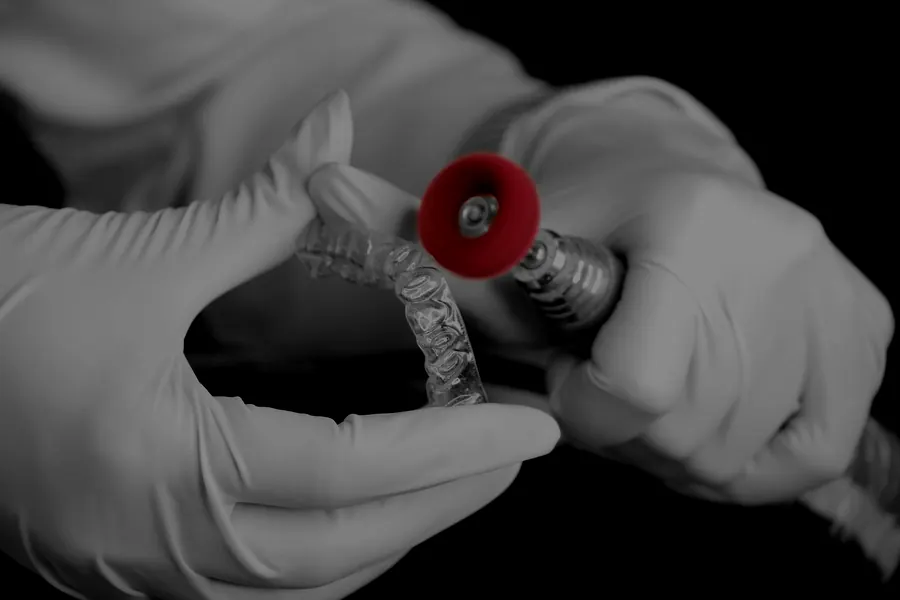
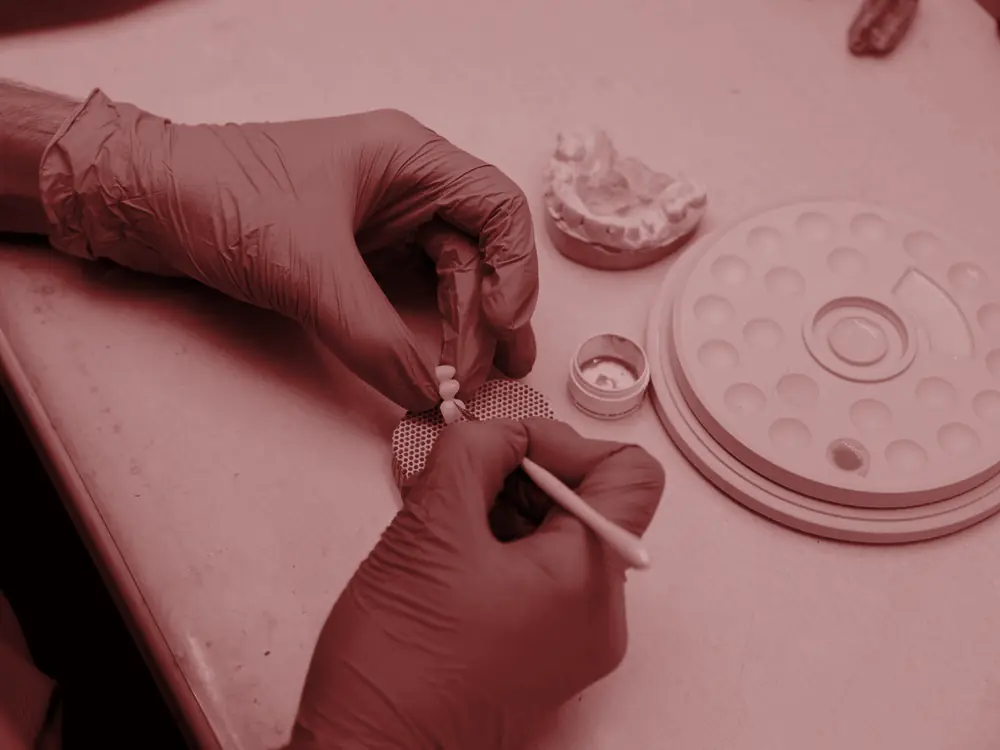
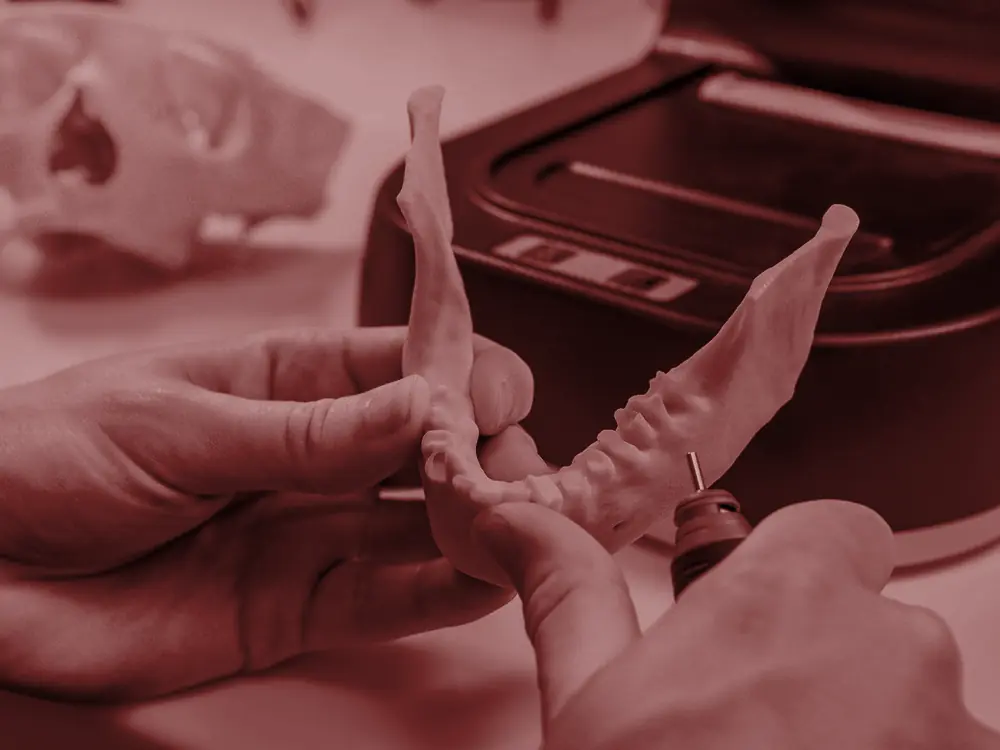
The trays for Gilgit patients are made in our own laboratory in Pakistan. Our technicians print a 3D model for every stage of your plan, form a tray over each one from clear USA imported sheet, then trim, polish, inspect and number every tray before it is packed for the journey north.
Most aligners sold in Pakistan are made abroad. Making ours here keeps the price in rupees and means replacements and refinements are quick to produce.
Other clinics buy their aligners from our laboratory too.
Family abroad
Yes. Relatives working or living abroad start with a video assessment, take their own moulds with a kit we courier to them, and receive trays from our laboratory, checking in with a photo roughly twelve days after each tray change.
Coming home to Gilgit for a holiday? They can begin in person with Dr Shaista and carry on once they fly back. Details are on our page for teeth aligners from abroad.
Free consultation
Fill in your name and number and we will ring you back to set a time with Dr Shaista Karim at DHQ Hospital Gahkuch. Prefer to message? WhatsApp 0330 3050007.