

01
Check
A clinician confirms the teeth are where they should be and the gums are healthy.

Teeth Aligners / Clear retainers
Clear retainers are thin, transparent trays that hold your teeth in their new position after aligners or braces. Teeth naturally try to drift back after straightening, and a retainer is what stops them. Here is how retainers work, how long to wear them, how they compare with fixed retainers, and how to look after them.
The short answer
For life, at nightAfter an initial full time phaseClear retainers are custom made transparent trays that keep teeth from moving after straightening. Yes, you need one: after any aligner or braces treatment, teeth tend to drift back towards their old positions, and wearing a retainer is the only reliable way to keep the result.
For our aligner patients, there is usually a retainer phase of about six months of regular wear after the last tray, followed by wearing retainers at night for the long term. Patients who keep wearing them keep straight teeth.
How we do it
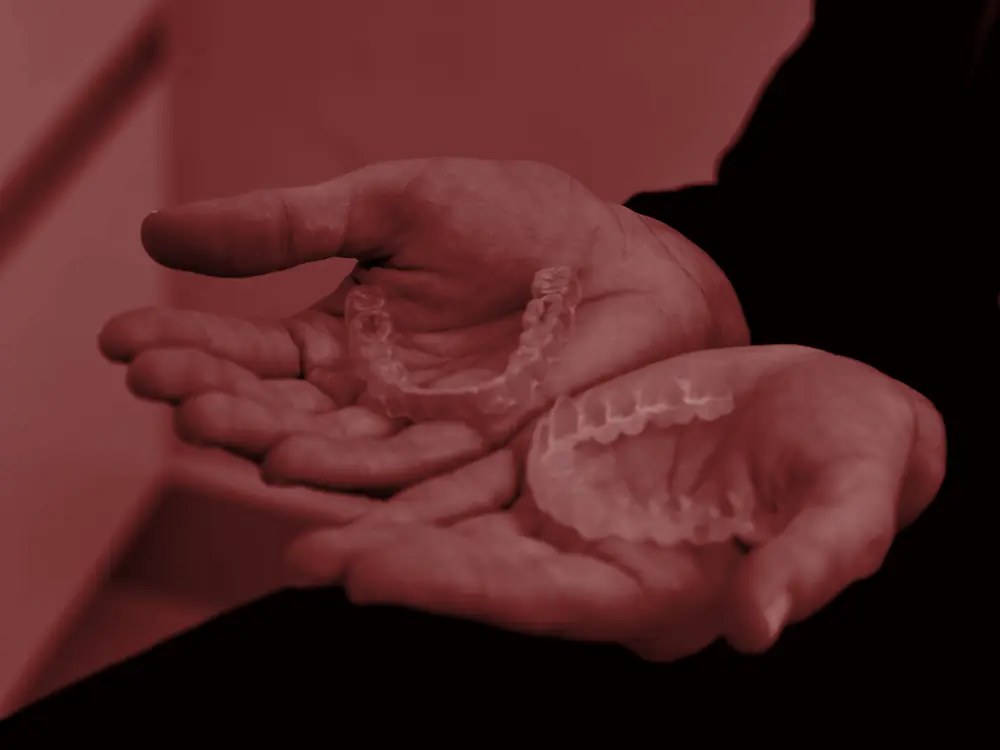
We make every retainer in our own laboratory in Pakistan, from impressions taken when your teeth are in their final position. Each retainer is formed over a printed model of your finished smile, trimmed and polished by hand, and fitted with a wear routine set by your clinician.
Why Teeth Aligners
Get your retainer from Teeth Aligners because the team that moved your teeth knows exactly where they finished, and the laboratory that made your aligners makes the retainer that holds them.
The clinicians who planned your treatment set your retainer routine and follow up.
Formed and finished in our own laboratory, with no import and no waiting on a parcel.
Edges trimmed and polished by hand so the retainer is comfortable for nightly wear.
Cleaning tablets come in the aligner kit, and the same routine keeps a retainer clear.
If your teeth shifted after earlier treatment, a short aligner plan can bring them back first.
Fittings and checks in five cities, with remote follow up for patients overseas.
Ask about a retainer at a free consultation, whether you are finishing treatment with us or your teeth have started to move.
Why teeth move
Teeth move back because the gum fibres and bone around them keep a memory of their old positions, and because teeth keep drifting slowly throughout life. The bone needs months to settle around the new positions, and the stretched gum fibres take even longer to adapt.
Rotated teeth are especially likely to turn back, closed gaps to reopen and lower front teeth to crowd again. These are the movements retainers are designed to hold.
Even people who never had treatment see their teeth shift over the years, most often as crowding of the lower front teeth. A retainer protects the result of treatment from both the relapse and that natural drift.
Kinds of retainer
There are three main types: clear removable retainers, fixed bonded retainers and wire and acrylic retainers. Each holds teeth in a different way, and some patients wear two kinds together.
| Retainer | Fixed (bonded) retainer | Wire and acrylic retainer | |
|---|---|---|---|
| What it is | A thin clear tray over the teeth | A thin wire glued behind the front teeth | A plastic plate with a wire across the front |
| Removable | Yes | No | Yes |
| Visible | Almost invisible | Hidden behind the teeth | The front wire shows |
| Cleaning | Easy, take it out and clean it | Floss threaded under the wire | Easy, take it out and clean it |
| Holds | Every tooth it covers | Usually the front teeth only | The arch, with some settling allowed |
| Depends on you | Wearing it as advised | Very little, it is always in | Wearing it as advised |
| Main drawback | Lost or forgotten | Can break or come unstuck unnoticed | More visible, can affect speech at first |
After aligner treatment, retainers are the natural choice for most patients, because they are made the same way as the trays you already know. For front gaps and some rotations, a fixed wire behind the front teeth may be added as well.
How long
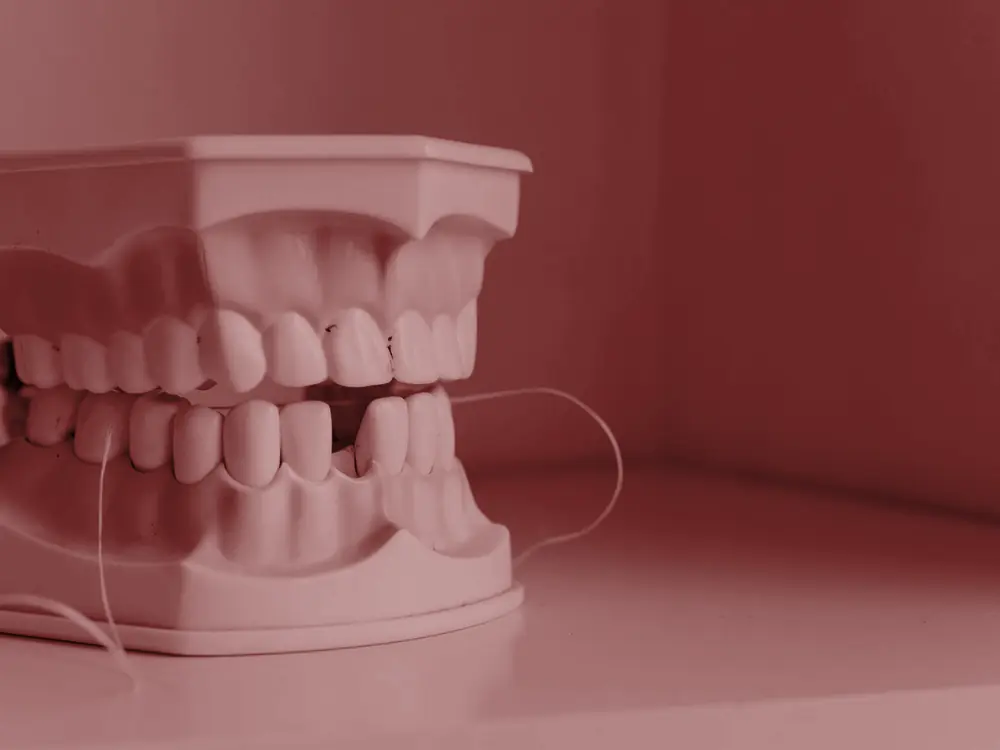
Most patients wear clear retainers almost full time for about the first six months after treatment, then at night for the long term. Teeth can shift at any age, so night time wear is best thought of as permanent if you want to keep the result.
The first months matter most, because the bone and gum fibres are still settling around the new positions. Cutting this phase short is the most common reason teeth move back soon after treatment.
After that, a retainer worn while you sleep is usually enough. If you stop for a while and the retainer feels tight when you put it back in, your teeth have started to move, and wearing it more often for a few nights usually brings them back.
Retainer or aligner
An aligner moves teeth; a retainer holds them still. Both are clear trays made from a scan of your teeth, but an aligner is shaped slightly differently from your current teeth so it pushes them, while a retainer is made to fit your finished teeth exactly.
Retainers are usually made from a slightly sturdier material than aligners, because they are worn for much longer, while each aligner is worn for only about a week.
Because they look alike, people sometimes keep wearing their last aligner as a retainer. That can work for a short time, but an aligner is not designed to last for years and will wear, crack and stop holding the teeth properly.
How they are made
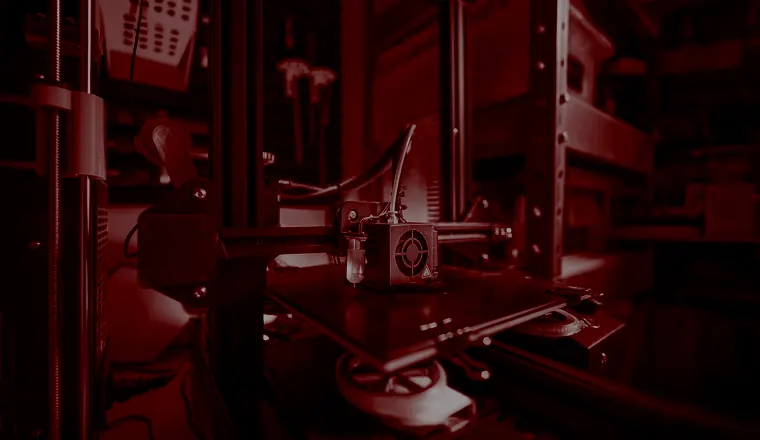
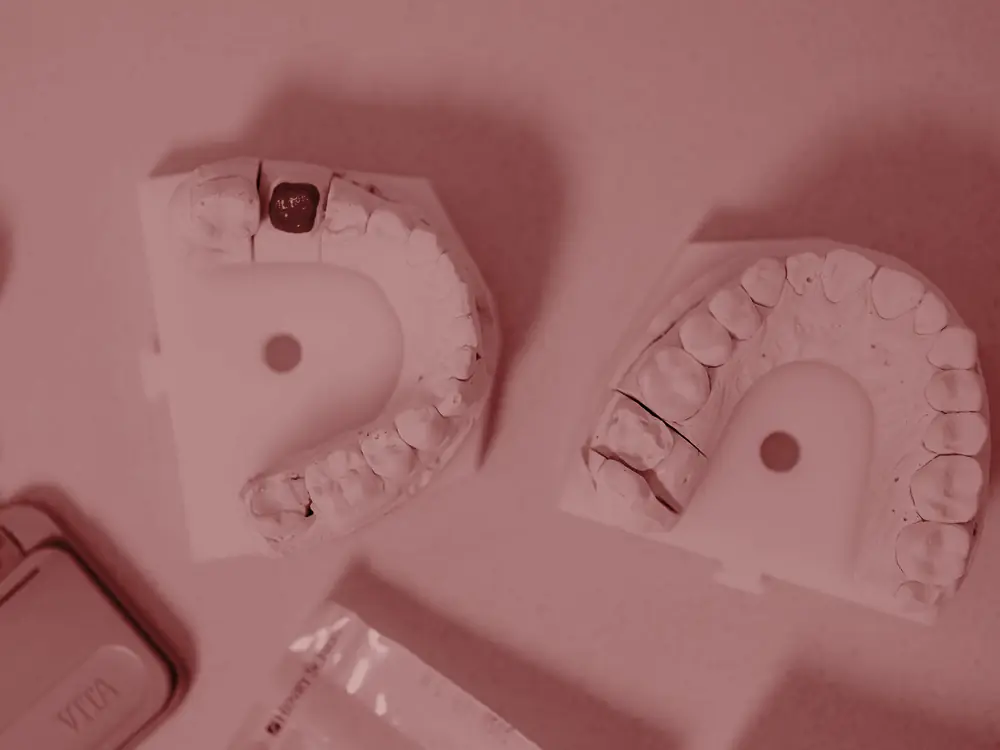
Retainers are made by scanning or taking impressions of your finished teeth, printing a model, and forming clear material tightly over it with heat and pressure. The retainer is then trimmed along the gum line and polished so it fits closely and comfortably.
The scan is ideally taken on the day treatment ends, so the retainer captures the teeth exactly as straightened.
3D printing

A 3D printed retainer usually means a retainer formed over a 3D printed model of your teeth, which is how most clear retainers are made today. Some retainers are now printed directly in clear resin, but most are still formed from clear sheet material over a printed model.
The advantage of printing is that your digital scan is kept. If a retainer is lost or cracks, a new model can be printed from the same file without taking new impressions, provided your teeth have not moved.
Fixed wires
Neither is better for everyone. A fixed retainer is always in place, so it does not depend on you remembering it, but it usually holds only the front teeth and is harder to clean around. A retainer holds every tooth it covers and is easy to clean, but it only works when worn.
Many clinicians use both for cases that are prone to relapse, such as closed front gaps and corrected rotations: a fixed wire behind the front teeth plus a retainer at night.
A fixed wire can break or come unstuck at one tooth without you noticing, letting that tooth move. If you have one, ask for it to be checked at every dental visit.
Fit
A retainer that feels tight means your teeth have moved slightly since you last wore it. Wear it more often, including during the day for a few days, and the tightness usually eases as the teeth return to position.
Do not force a retainer onto your teeth if it will not seat at all, because that can strain the teeth and crack the retainer. Contact us so a clinician can check whether the teeth need a short course of treatment first.
Tightness after a missed night or two is normal and harmless; tightness after weeks or months without the retainer is a warning that the teeth are drifting.
Lost or broken
Get a replacement as soon as possible, because teeth can start moving within weeks without a retainer. If your scan is on file and your teeth have not moved, a new retainer can be made from it; if they have moved, a new scan is needed and sometimes a short correction first.
Until the replacement arrives, wear your last aligner at night if you still have it and it fits. That gives the teeth some support in the meantime.
Most retainers are lost at meal times, wrapped in a napkin and thrown away. Keeping the case with you is the simplest way to avoid it.
Cleaning
Clean retainers by rinsing them every time you take them out and brushing them gently each day with a soft toothbrush and cool water. Avoid hot water, which can warp them, and coloured or gritty toothpaste, which can scratch and cloud them. Our short video shows a simple routine for clear trays.
Store the retainer in its case, dry, whenever it is out of your mouth, and brush your teeth before putting it back in so food is not trapped against the teeth overnight.
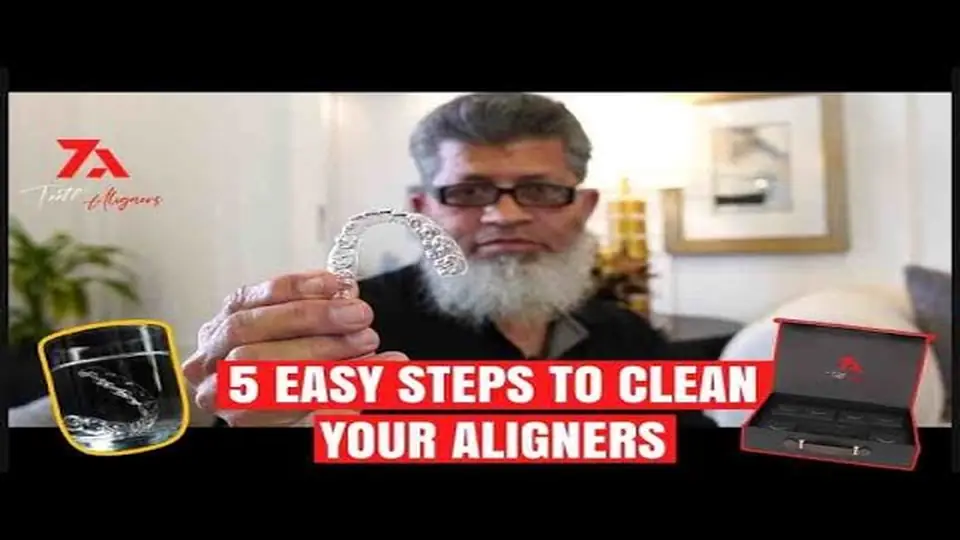
Cleaning products
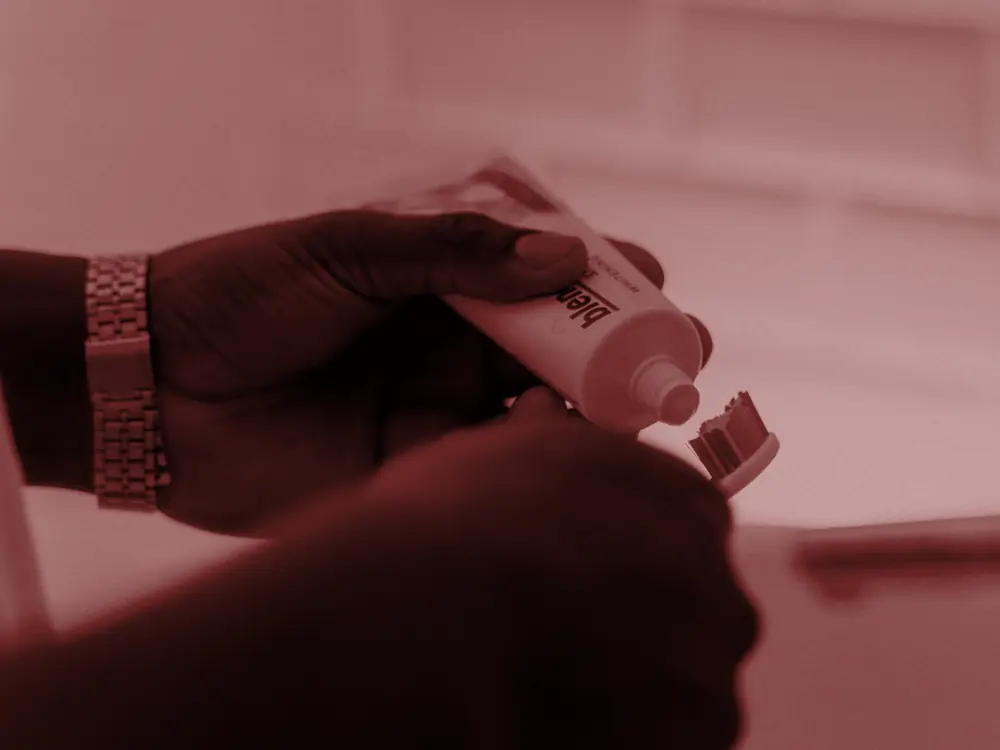
Retainer cleaning tablets can help keep a retainer fresh, especially once or twice a week as a deep clean, but they do not replace daily brushing. Follow the product's instructions, use cool or lukewarm water, and rinse well afterwards.
Avoid soaking retainers in mouthwash for long periods or in anything containing bleach, which can cloud and weaken the plastic. For more on mouthwash and clear trays, read our guide to mouthwash with aligners.
A retainer that has become cloudy or smells even after cleaning is usually due for replacement.
Lifespan
Clear retainers usually need replacing every year or two, sooner if they crack, warp, cloud or stop fitting snugly. How long one lasts depends on how carefully it is cleaned and stored, and on whether you grind your teeth at night.
Grinding wears through retainers faster, sometimes making small holes over the back teeth. If that happens, tell us, because the retainer is also protecting your teeth from the grinding.
Keeping your digital scan on file makes replacements simpler, as long as your teeth have stayed in position.
Daily life

No, take a retainer out to eat and to drink anything other than plain water. Food can crack it, and sugary or hot drinks trapped under it can harm your teeth or warp the plastic.
Because most long term wear happens at night, eating is rarely an issue once you are past the full time phase. During that first phase, treat the retainer like an aligner: out for meals, brush, back in.
Speech
Retainers can cause a slight lisp for the first day or two while your tongue adjusts, but it usually fades quickly. Because they are thin and follow the shape of the teeth closely, most people speak normally with them very soon.
Wire and acrylic retainers, which cover the roof of the mouth, tend to affect speech more at first. Fixed wires behind the teeth rarely affect speech at all.
Bite cases

No. A retainer holds teeth where they are; it cannot correct an overbite or any other bite problem. Correcting the bite needs aligners or braces, after which a retainer keeps the corrected position.
After a deep bite has been corrected, the retainer is especially important, because deep bites tend to return. Some retainers for these cases are designed to help hold the bite as well as the alignment. Read more on our page about aligners for overbite.
After braces
Yes, usually. If you had braces or aligners elsewhere and need a new or replacement retainer, a clinician first checks that your teeth are still in a good position and your gums are healthy, then your teeth are scanned so a retainer can be made to fit.
If your teeth have already moved since treatment, a retainer made now would hold them in their shifted position. In that case, the clinician may suggest a short course of aligners to bring them back first, then a retainer.
Bring any records from your previous treatment if you have them. They help show how far the teeth have moved.
Results worth keeping
Retainers matter most for closed gaps and corrected rotations, which are the results most likely to undo themselves. These two real cases from our aligners show the kind of result a retainer is there to protect.
 After

 After

If teeth moved
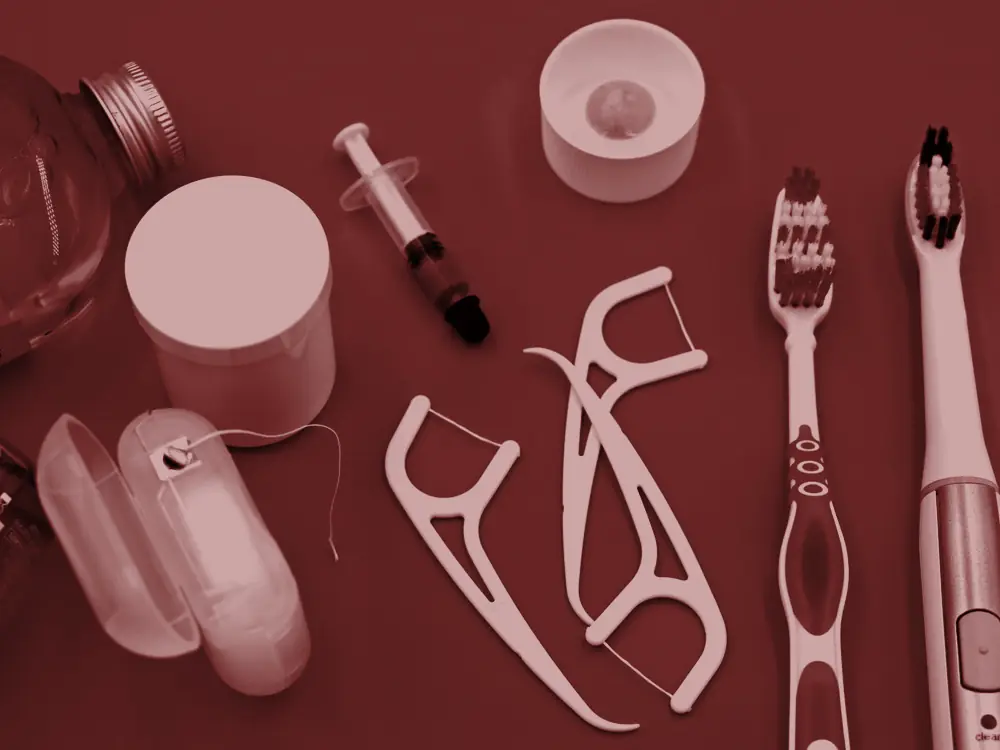
If your teeth have moved, a short course of aligners can usually bring them back, followed by a new retainer. Relapse cases are often quicker than the original treatment, because the teeth have moved less far.
This is one of the most common reasons adults come to us: straight teeth from braces as a teenager, retainers stopped, lower front teeth crowded again a few years later. Our page on aligners for crooked teeth covers these relapse cases.
This time, the retainer is part of the plan from the start, and night time wear continues for the long term.
Timing
Teeth can start to move within weeks of stopping a retainer, especially in the first months after treatment, when the bone and gum fibres are still settling. Later on, movement is usually slower, but it does not stop entirely.
The first sign is often a retainer that feels tight when you put it back in after a break. That tightness is the retainer pushing the teeth back to where they should be, which is exactly why wearing it again quickly matters.
Movement is gradual, so many people do not notice it in the mirror until a gap reopens or the lower front teeth begin to overlap again.
Night wear
For most people, yes, once the first months of full time wear are over. Night wear gives the teeth a regular reminder of their position, which is enough to hold most results. Teeth that have only just been moved need more than that, which is why the first phase is almost full time.
If your retainer feels tight every morning, that is a sign your teeth are pushing against it during the day, and the clinician may suggest wearing it a little more for a while. If it slips on easily night after night, your night time routine is doing its job.
Grinding
Yes, and a retainer also gives the teeth some protection from night time grinding. The catch is that grinding wears retainers out faster, sometimes making holes over the back teeth within months.
If you notice thinning or holes, or wake up with sore jaw muscles, tell us. Grinding can be managed with a retainer made from a tougher material or with a separate night guard, and the clinician will suggest which suits you.
Teeth and gums
A retainer does not cause cavities or gum problems by itself, but wearing one over teeth that have not been brushed can, because any food or sugar trapped underneath sits against the teeth all night. Brushing before the retainer goes in prevents this.
Fixed wires behind the front teeth collect plaque and tartar if they are not cleaned carefully, which can inflame the gums. Threading floss under the wire each day, and having it checked at dental visits, keeps the gums healthy.
Fixed wires
Contact a dentist promptly and, if you have one, wear your removable retainer full time until the fixed wire is repaired. A broken or loose wire stops holding the tooth it was attached to, and that tooth can move quickly.
Run your tongue along the back of your front teeth occasionally: if you feel a rough spot, a sharp end or a wire that moves, something has come unstuck. Do not try to glue or bend it yourself.
If the wire has been off for a while and the teeth have shifted, a short course of aligners may be needed before a new wire is fitted.
Check-ups

Yes. Bring your removable retainer to dental check-ups so the fit and condition can be checked, and ask for any fixed wire to be examined. Small problems, such as a crack, a loose bond or a retainer that no longer seats fully, are easy to fix early.
A check-up is also a good moment to ask whether your wear routine still suits you. Some people can reduce to a few nights a week after several stable years; others need to stay at every night.
Your bite
A clear retainer covers the biting surfaces, so while you wear it your teeth meet on plastic rather than on each other. This does not change your bite, but in the weeks after treatment the teeth naturally settle into a slightly firmer contact when the retainer is out, which is normal.
If your bite feels uneven when the retainer is out, or one tooth seems to hit first, mention it at your next check. The clinician can see whether the teeth are settling normally.
Ramadan
Yes. Wearing a retainer does not affect fasting, and Ramadan is often an easy time to keep up night wear. Take it out for suhoor and iftar, brush your teeth, and put it back in.
During the full time phase, the long daytime fast actually makes wearing the retainer easier, because there are no meals to interrupt it until iftar.
Avoid these
The most common retainer mistakes are stopping too early, losing it at meals and cleaning it with hot water. These are the habits that most often undo a straight smile.
Cutting the first months of full time wear short is the most common reason teeth move back soon after treatment.
Most lost retainers are thrown away with a napkin at a meal. Use the case, every time.
Washing or soaking in hot water warps the plastic so it no longer fits the teeth.
Pushing a retainer onto teeth that have moved a lot can strain them and crack it.
Dogs love chewing retainers. Keep the case closed and out of reach.
A cracked retainer holds the teeth unevenly. Replace it rather than wearing it until it breaks.
First days
A new retainer feels snug, and for a day or two you may notice it when you speak or swallow. Because it is made to fit your finished teeth exactly, it should not cause pressure the way a new aligner does, unless your teeth have already started to move.
If you have just finished aligners, it will feel familiar: a thin, close fitting tray. If you had braces, the smooth feel of a clear tray against the teeth is usually a welcome change from brackets.
A sharp edge or a sore spot on the gum is not normal. A rough edge can be smoothed quickly, so let us know.
Storage
Store your retainer dry in its ventilated case whenever it is out of your mouth, away from heat and out of reach of pets. Never leave it on a car dashboard, near a stove or in direct sunlight, because heat warps the plastic.
Rinse it before putting it away, so saliva does not dry onto it, and wash the case itself every few days. A dirty case puts bacteria straight back onto a clean retainer.
Heat
No. Boiling water, dishwashers and very hot soaks will warp a clear retainer so it no longer fits your teeth. Clean it with cool or lukewarm water, a soft toothbrush and, occasionally, a cleaning tablet made for retainers.
A warped retainer can look normal but hold the teeth unevenly or not seat fully. If your retainer suddenly fits differently after cleaning, heat is the most likely cause, and it should be replaced.
After braces
Yes. Retention is needed after any straightening, whether it was done with braces or aligners, because the reasons teeth move back are the same. Braces patients are often given a fixed wire as well as a removable retainer.
Many adults who come to us for aligners had braces as teenagers and were given a retainer they stopped wearing. Their teeth are the clearest evidence of why the habit matters.
Getting a retainer
Getting a retainer takes a short check, a scan and a fitting. For our aligner patients, it follows straight on from the last tray.
A clinician confirms the teeth are where they should be and the gums are healthy.

Your finished teeth are scanned so the retainer captures them exactly.
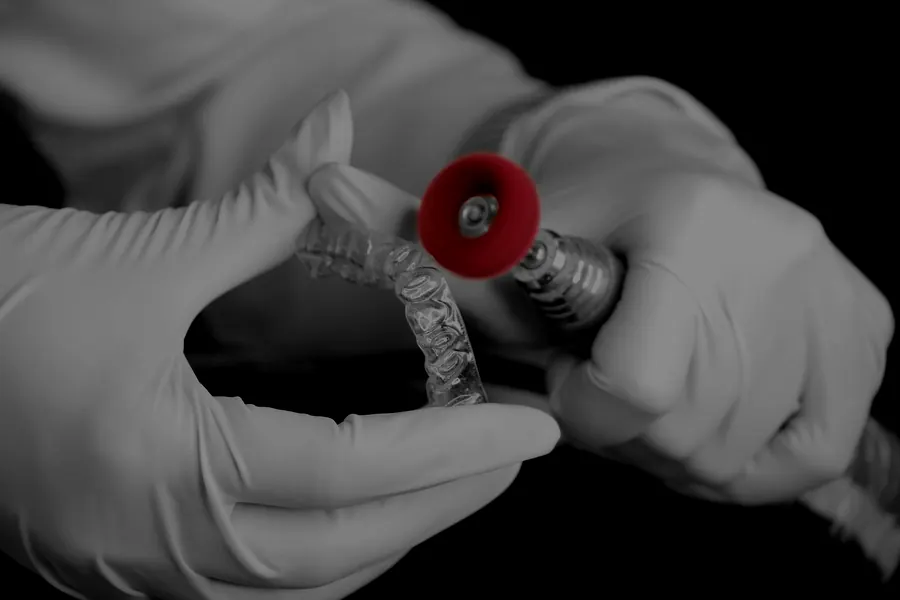
A model is printed and the retainer formed, trimmed and polished.

You try the retainer, learn how to wear and clean it, and start the full time phase.

After the first months, night time wear keeps the result for the long term.
Teenagers
Teenagers need retainers at least as long as adults, and often benefit from wearing them carefully through the late teens, because the jaws are still finishing their growth and teeth can shift as they do.
The challenge with teenagers is consistency. A retainer left in a school bag does nothing, so parents often help by making it part of the bedtime routine. Our parents' guide to clear aligners for teens covers what to watch for during and after treatment.
Travel
Take your retainer and its case with you and keep wearing it at night, because a week or two away is long enough for teeth to start moving. Pack it in your hand luggage, not a suitcase that could be delayed or lost.
If you live abroad and lose a retainer, tell us. Where your scan is on file and your teeth have not moved, a replacement can be made in our laboratory in Pakistan and sent to you.
Questions
Yes. Teeth tend to drift back after any straightening treatment, and a retainer is what keeps them in place. Our aligner patients usually wear retainers almost full time for about six months, then at night.
Usually almost full time for the first six months or so, then at night for the long term. Teeth can move at any age, so night time wear is best treated as permanent.
Stopping completely risks your teeth moving back, especially the lower front teeth. Many people reduce to a few nights a week after a few years, but some movement is always possible without a retainer.
Your teeth will gradually move back towards their old positions. Gaps can reopen, rotated teeth turn back and lower front teeth crowd again.
Retainers are almost invisible at normal speaking distance. Because most long term wear happens at night, few people ever see them.
No. Take a retainer out to eat and to drink anything other than plain water, then brush your teeth before putting it back in.
Rinse it each time it comes out, brush it gently each day with a soft toothbrush and cool water, and store it dry in its case. Avoid hot water and gritty toothpaste.
Yes, as an occasional deep clean alongside daily brushing. Use cool or lukewarm water, follow the instructions and rinse the retainer well afterwards.
Usually every year or two, or sooner if they crack, warp, cloud or stop fitting snugly. Grinding wears them out faster.
A tight retainer means your teeth have moved slightly. Wear it more often for a few days and it should ease. If it will not seat at all, do not force it; contact us.
Get a replacement quickly, because teeth can start moving within weeks. If your scan is on file and your teeth have not moved, a new retainer can be made from it.
Neither is better for everyone. A fixed wire is always in but holds mainly the front teeth; a retainer holds every tooth but only works when worn. Some patients use both.
No. A retainer holds teeth in place; it is not designed to move them. If your teeth have moved, a short course of aligners can bring them back before a new retainer is made.
For a short time, if it still fits. Aligners are not designed to last for years and will crack and wear, so a proper retainer should replace it.
Retainers should not hurt. A new retainer, or one worn after a break, can feel tight for a day or two. Persistent pain or a sore spot on the gum means it should be checked.
Usually, yes. A clinician checks your teeth and gums first, then your teeth are scanned so a retainer can be made to fit.
A retainer holds the teeth it covers in place, which helps protect your result whatever the cause of pressure. Your wisdom teeth can be checked at the same visit.
Missing one night occasionally is unlikely to undo your result, though the retainer may feel tight the next night. Missing many nights in a row lets teeth start to move.
Yes, retainers are often chewed by pets or broken by small children. Keep it in a closed case and out of reach whenever it is not in your mouth.
Usually, yes, because both arches were straightened and both can move back. Lower front teeth in particular tend to crowd again without a retainer.
Some whitening trays look like retainers, but a retainer is not designed to hold whitening gel. Ask before using one for whitening, because the fit and material differ.
Yes. Wearing it more than required does no harm, and wearing it during the day for a few days is the right response if it has started to feel tight.
No. A retainer holds teeth in position; a night guard protects teeth from grinding. A retainer offers some protection against grinding, but heavy grinders may need a separate guard.
Yes, plain water is fine. Take the retainer out for any other drink, especially sweet or hot ones, which can harm the teeth or warp the plastic.
A smell usually comes from bacteria and dried saliva on the retainer or in its case. Brush the retainer daily, rinse it before storing it, wash the case regularly and use a cleaning tablet now and then. If the smell persists, replace it.
Only briefly, until a replacement is ready. A crack lets the retainer flex, so it holds the teeth unevenly and can split completely. Replace it as soon as you can.
Sometimes. A new crown or a large filling can change the shape of a tooth enough that the old retainer no longer fits properly. Check the fit after any major dental work.
Yes, and closed gaps are among the results most likely to reopen. A front gap often benefits from a fixed wire as well as a retainer.
Keep reading
Whether you finished aligners with us or braces elsewhere, a clinician can check your teeth and make a clear retainer that fits them as they are now.